- Home
- See & do
- Art objects
- Mosaic Man and the Elements of Nature
Mosaic Man and the Elements of Nature
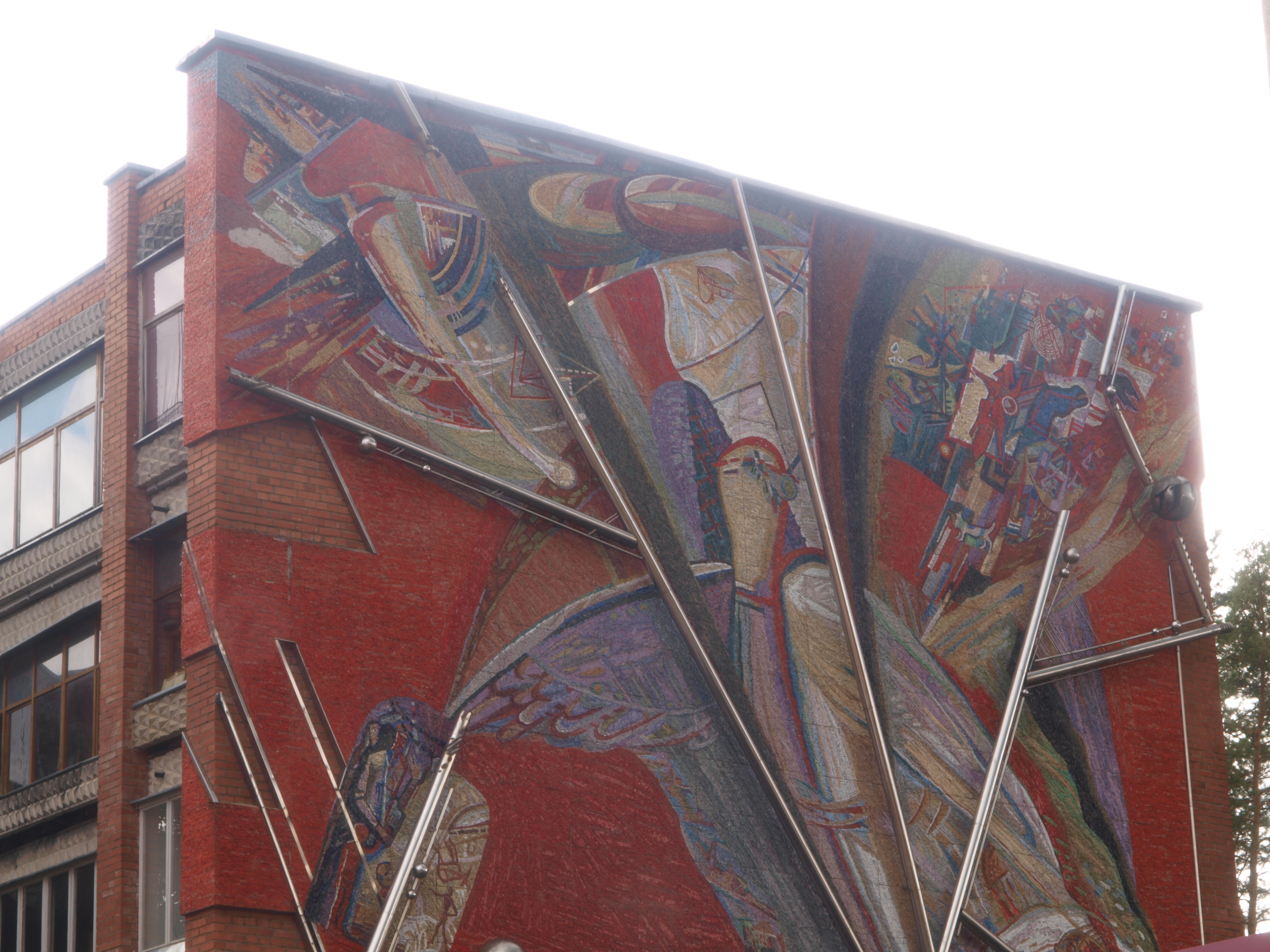
The mosaic “Man and the Elements,” located on Sedulinos Avenue in the centre of Visaginas, is an artistic composition created in 1990 that invites viewers to reflect on the relationship between humanity, nature, and civilisation. Its author is the artist Viktor Tatarenko.
The artwork depicts the four fundamental elements – fire, earth, water, and air. These are the basic forces of nature upon which life in the world and human existence depend. However, the mosaic’s narrative extends beyond the depiction of natural forces.
It also reflects the development of humanity and civilisation – from the earliest cave paintings to the creation of the atom. This symbolic journey reveals the history of human curiosity and discovery, as well as our ability to explore, create, and pursue ever greater achievements.
One of the most striking images in the composition is Icarus, symbolising the human being of the future. His figure evokes humanity’s dream of rising above the ordinary, overcoming limitations, and reaching what once seemed impossible.
The mosaic’s vivid red colour palette also has its own story. The artist associated it with the red colour of many buildings in Visaginas at the time. In the artwork, red takes on additional meanings – evoking fire, energy, vitality, and the joy of being human.
Nevertheless, the central message of the mosaic lies not only in human achievements. Although humanity is perceived as the crown of creation, it cannot fully control the forces of nature. Nature remains powerful, independent, and beyond human command.