- Home
- Visaginas faces
-
Andrius Pich
Andrius Pich
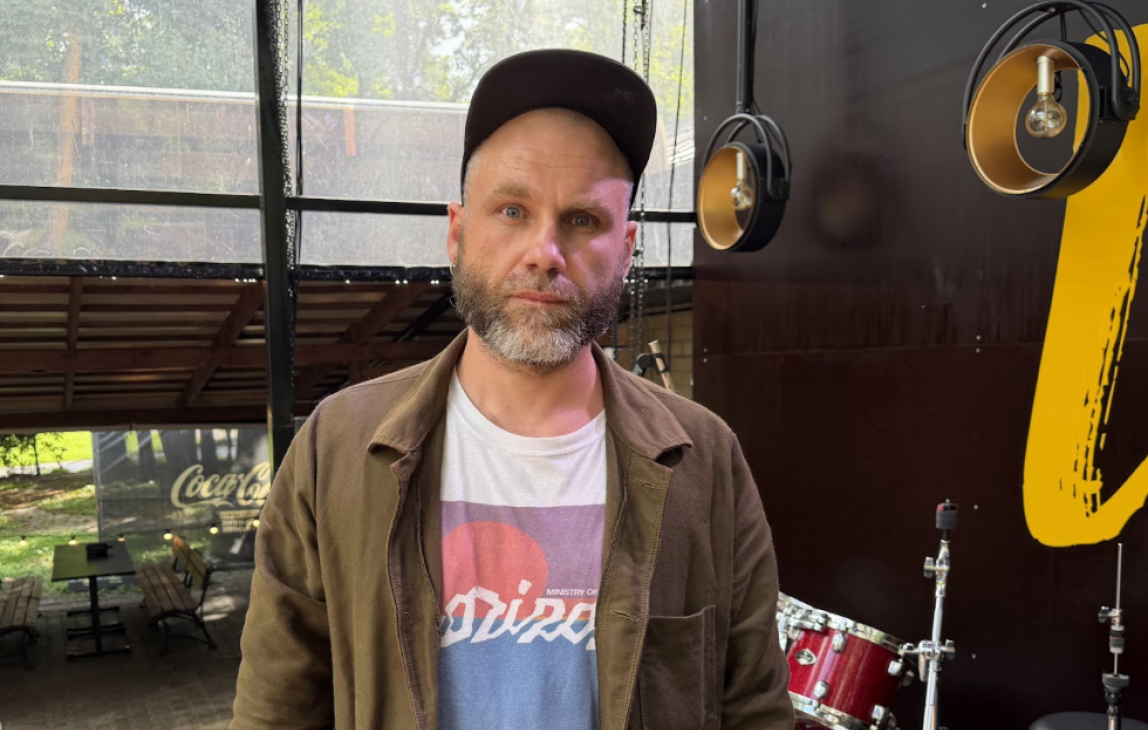
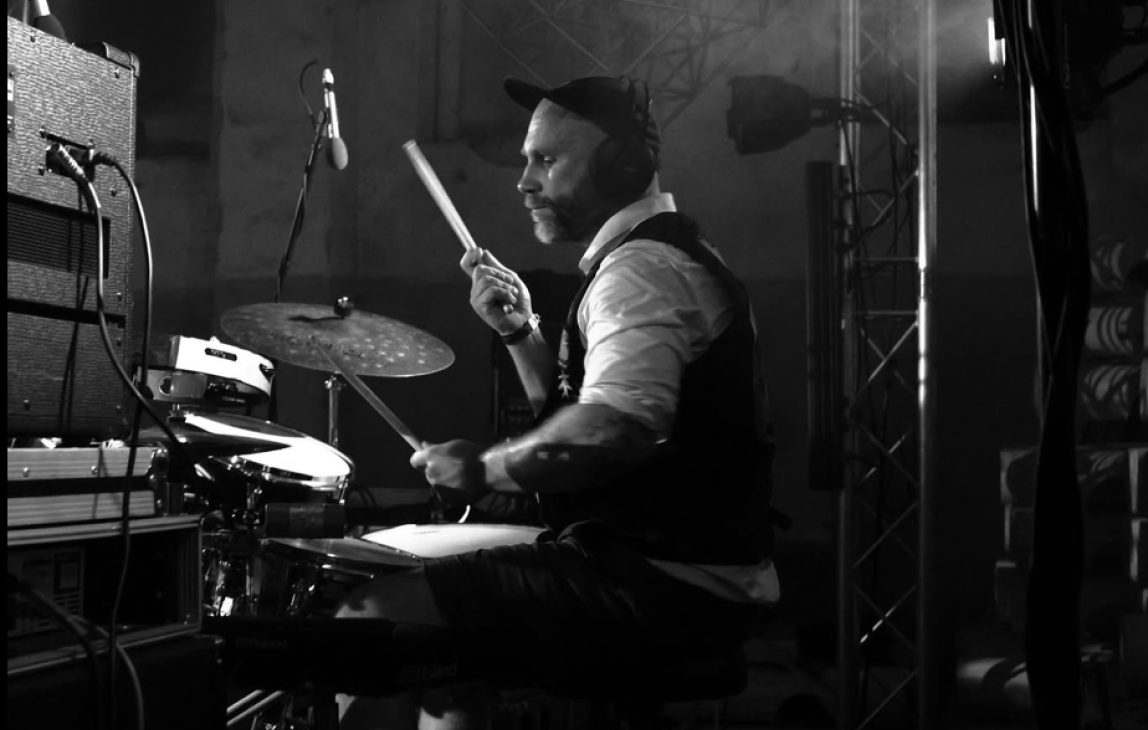
Andrius Pich, better known on the Vilnius scene as Andreika, is the drummer of the “Lapkričio dvidešimtosios orkestras”, born and raised in Visaginas. He later left for France and Vilnius, but eventually returned to the city, where he is now actively involved in its concert and cultural life.
Between Visaginas, Vilnius and France
When asked whether he had ever considered leaving Visaginas, Andrius says that at one point he seriously planned to move to France. As a French philologist, he imagined himself living and working there. However, the plan never came to fruition. Andrius admits that establishing himself in France proved difficult - he needed to find his place, a job and a home, and, as he now understands, he was not entirely ready to leave on an emotional level.
“I think I deliberately ruined everything so that I could come back home.”
- Andrius Pich.
Later, Andrius spent a considerable amount of time in Vilnius, but Visaginas remained an important part of his life even then. He emphasises that there was never a point when he completely moved to Vilnius and only returned to his hometown occasionally. On the contrary, moving between the two cities was always important to him.
“Visaginas - Vilnius has always been an important axis. The train was very important.”
According to Andrius, this axis remains part of his life today: he spends part of the week in Visaginas and part in Vilnius. So, for him, living between two cities is not a temporary stage - it has become a normal part of his life.
Music as a Reason to Live in a Garden Community
When asked how he feels about living in Visaginas today, Andrius says that recently he has become more actively involved in the city’s cultural life — meeting people who are involved in culture here and increasingly becoming part of it himself.
He chose to live in a garden community primarily because of music. As a drummer, Andrius has a space here where he can make music whenever he wants. As he puts it, “the garden is an opportunity to make music whenever I want - at night, during the day, in summer, in winter.” He managed to reach an agreement with his neighbours about the noise, so the place became a convenient space for creativity.
Photo by Jevgenija Cholodova
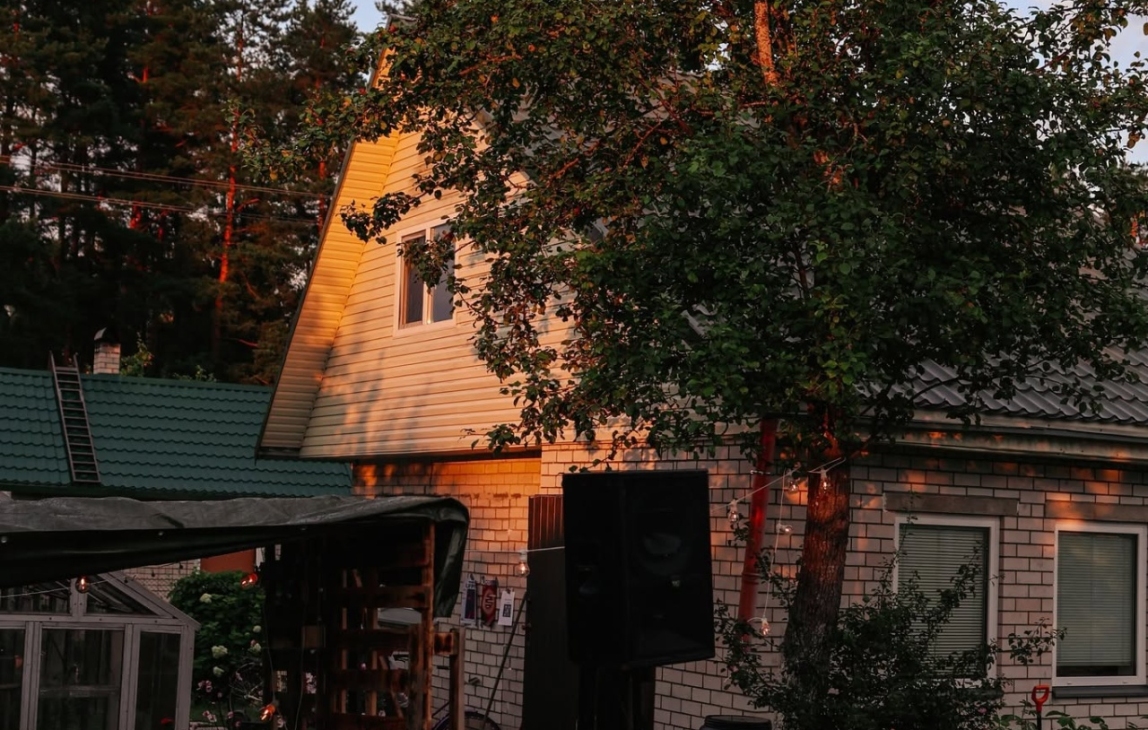
The garden house has become not only a place to live but also a studio for Andrius. He recorded his albums here and also worked with other people from Visaginas and the music group “MTS”, whose music, according to him, can still be heard in Vilnius. Music and the opportunity to have his own creative space became the main reason for choosing to live in the garden community.
“The main reason is music, the opportunity to make music.”
Andrius also says that he simply already had the garden house and wanted to spend time there. Gradually, the garden community became a place where his everyday life and musical activities came together.
Photo by Jevgenija Cholodova
Drum Lessons in Visaginas
When asked whether learning to play the drums is popular in Visaginas, Andrius says he did not expect to receive so much interest himself. At first, he thought there would be one or a few students, but more people wanted to learn to play than he had expected.
Andrius started giving drum lessons about six months ago, so for now he cannot say whether the interest will last in the long term. He thinks that some people may have been attracted by the novelty itself, but hopes that, over time, it will become clear whether this will turn into a regular activity.
“For now, it seems to be popular, but I don’t know whether it’s the novelty that attracts people or genuine interest that will last.”
Still, the first results are encouraging for Andrius - he has gained more students than he initially expected. Those who want to try playing the drums can sign up now, and the lessons take place in the same garden where Andrius lives, creates and has his own music studio.
Photo by Jevgenija Cholodova
Places That Have Remained Close to His Heart
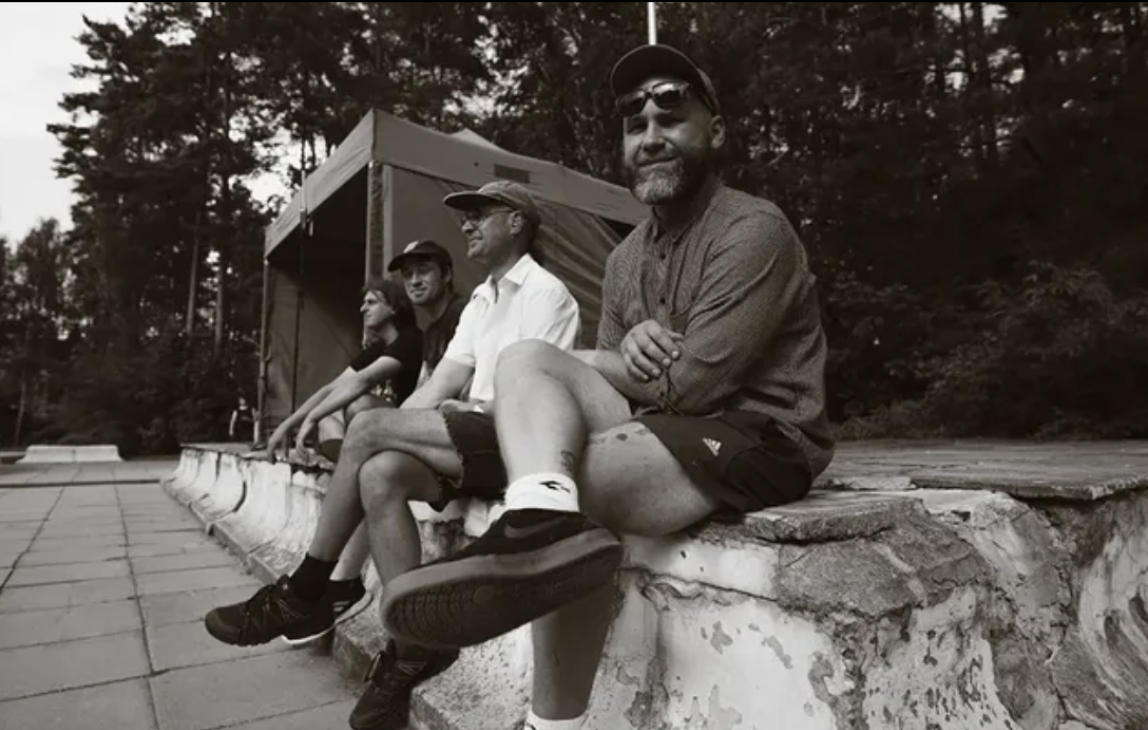
When asked about his favourite places in Visaginas, Andrius names three - each important to him for a different reason. The first is the so-called “Trikampis”, which the younger generation calls the “Bermuda Triangle”. It is an unfinished hospital building where he and his friends spent a large part of their teenage years. The building had become something of a base for them, so although today it is an abandoned site and not always suitable for visiting, it remains very dear to Andrius.
Important: the unfinished building is not a tourist attraction - the area is not intended for visitors and may be unsafe.
Photo by Jevgenija Cholodova

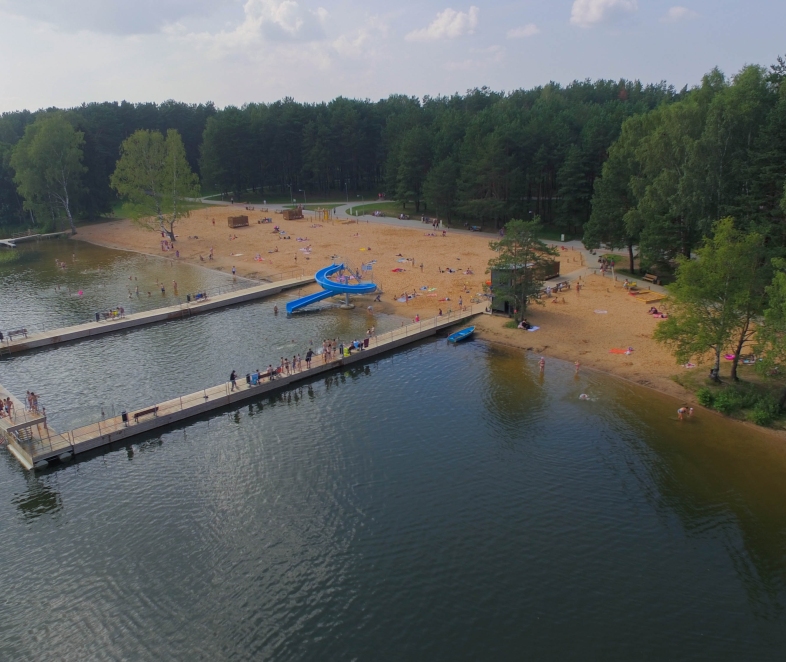
The second place is the “Pavasaris” garden community and the lake nearby. Andrius especially likes the forest beach, where he can step away from everyday life: spend time alone, look at the water, watch the birds, breathe, swim or simply meditate. What makes this place important to him is not a particular attraction, but the sense of peace, the opportunity to be alone with himself and escape the bustle of everyday life.
The third place Andrius mentions is the “Banga” hall at the Visaginas Cultural Centre. In recent years, he has spent quite a lot of time here, stopping by the SAVA café, while concerts are held here during city celebrations. Andrius himself has also performed at “Banga”, so the place is closely connected to the city’s contemporary cultural life for him.
Photo by Jevgenija Cholodova
The Garden as a Place for Small Concerts and New Experiments
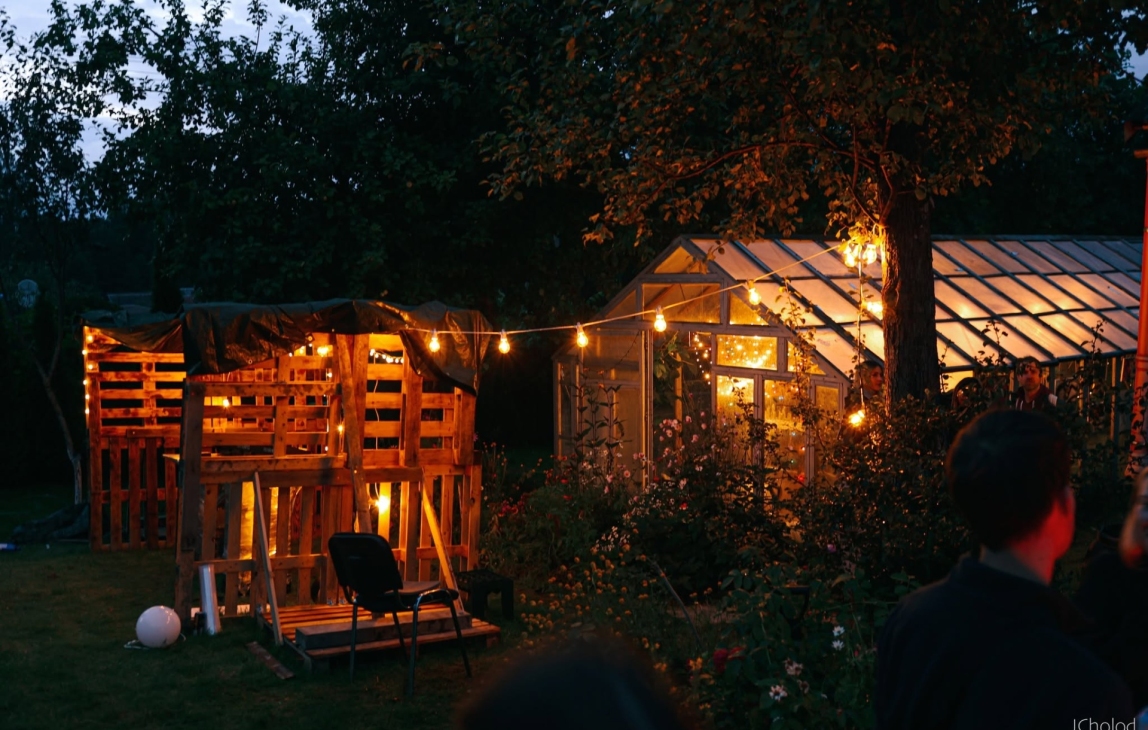
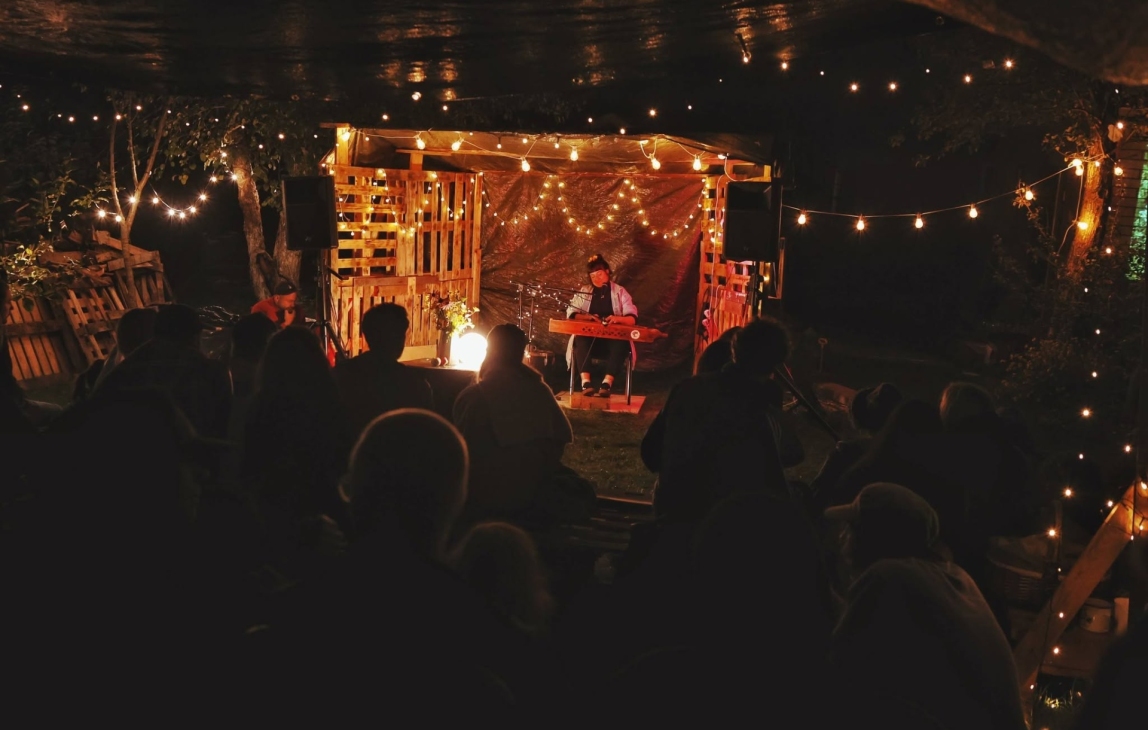
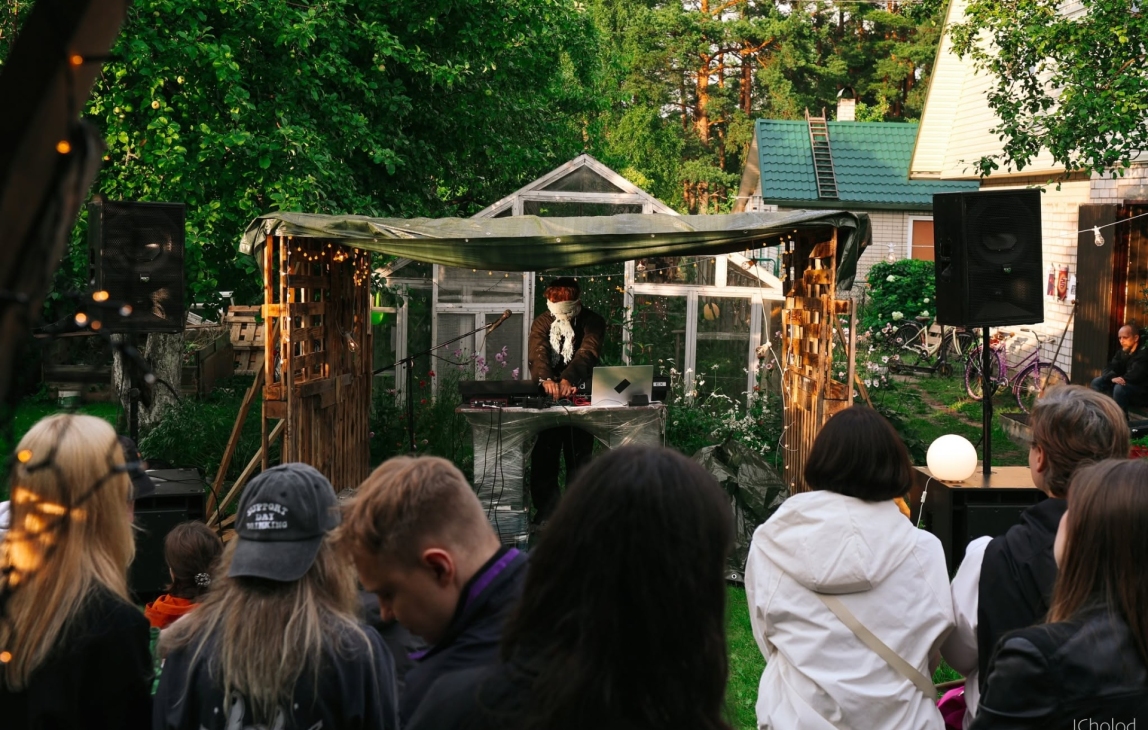
Living in the “Pavasaris” garden community, Andrius decided to explore another way of using the space - hosting small concerts on his six-are plot. This is how the initiative for acoustic and electroacoustic music concerts came about, which he sees as an opportunity to experiment with a garden community that is gradually becoming more residential.
“I got the impression that the ‘Pavasaris’ garden community is becoming something of a playground. I became interested in playing around with it too, experimenting.”
- Andrius Pich
According to him, more and more people are moving to the garden community not only to spend time there or grow vegetables, but also to live there. In winter, smoke can be seen rising from chimneys in the evenings, while neighbours increasingly talk about how the area could use more shops, perhaps even a bar or a restaurant. To Andrius, all of this shows that the place is gradually changing.
Photo by Jevgenija Cholodova
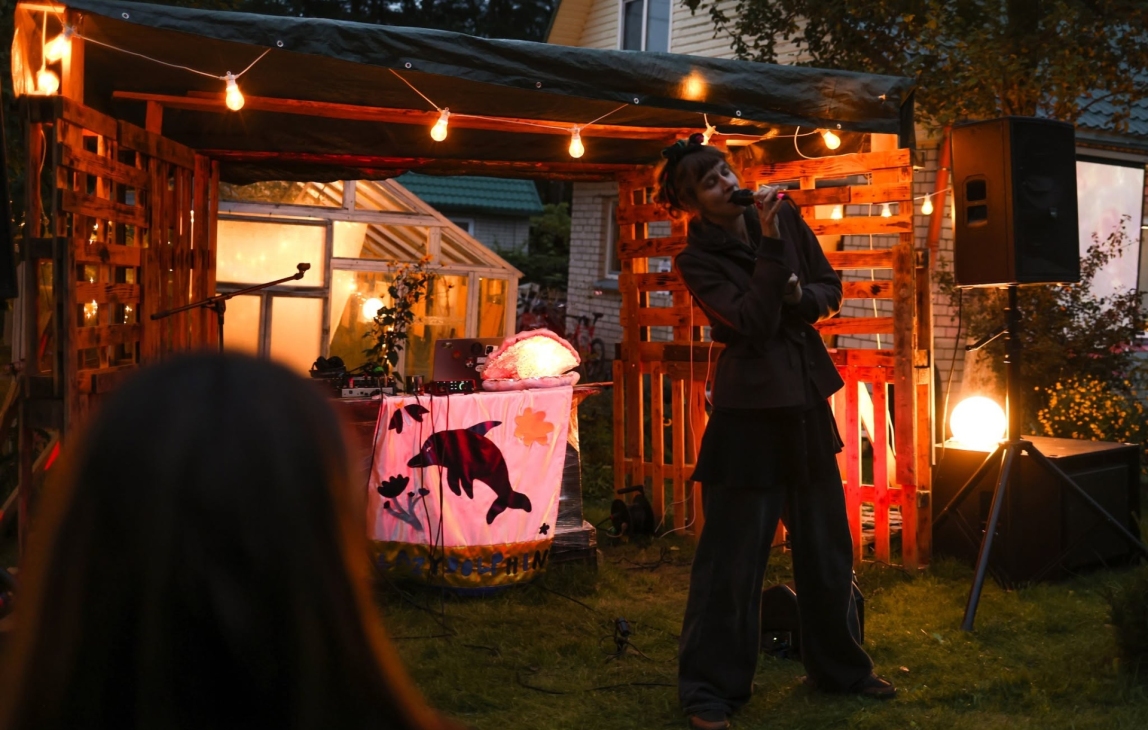
Music became his way of contributing to this change through what he knows best. The first concerts in the garden featured Jausmė, LazyDolphin and Lifippos. A small-scale format was chosen - without loud sound, full-scale sound production or a large stage.
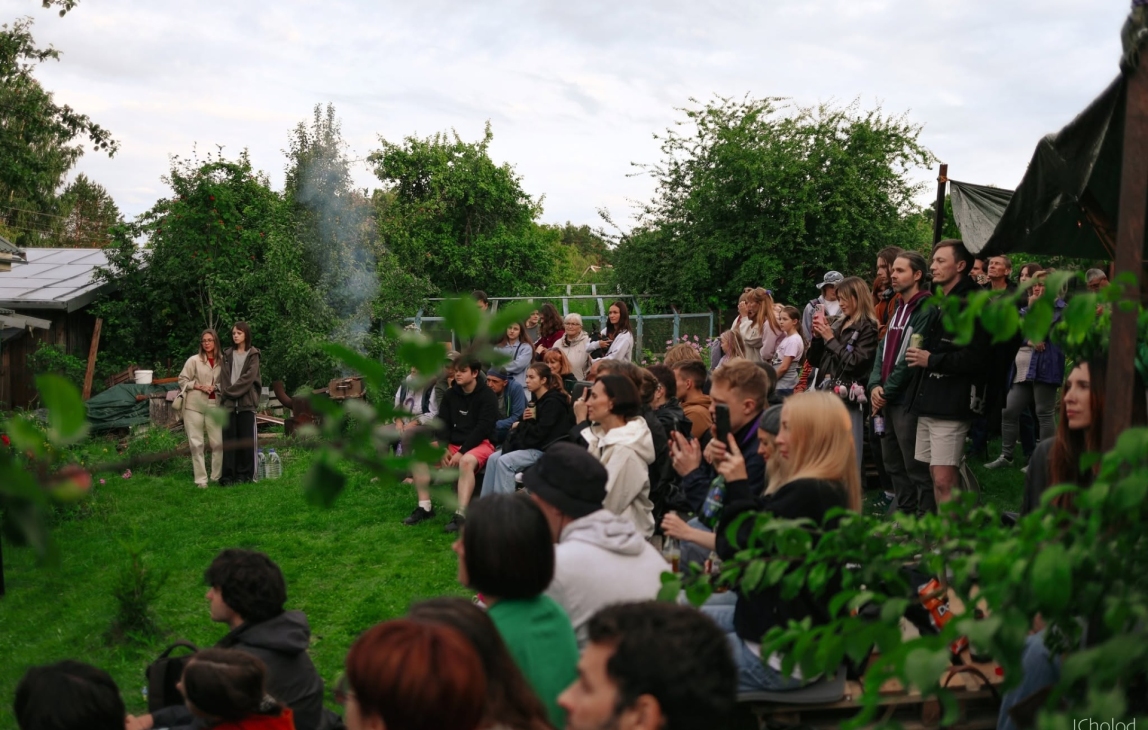
“I generally feel tired of big concerts and loud sound. It seems to me that the spirit of the times is such that more and more smaller events are appearing. People are increasingly gathering in smaller spaces. Why go somewhere with a huge crowd when you can get together somewhere more intimate?” he reflects.
According to Andrius, the idea could continue to grow. The garden is becoming not only a place for him to live and make music, but also a space where he can experiment with a different kind of event format - smaller, more intimate and better suited to the place itself.
Photo by Jevgenija Cholodova
The Myth of Visaginas: The City Is More Than Concrete and Steel
When talking about what he would like to say to someone visiting Visaginas for the first time, Andrius recalls the one-day festival “Nuclear Cadaver Fest”, held in 2008. It was one of his first attempts to organise an event in Visaginas. After the concert, quite a few people approached him and shared an unexpected impression: until then, they had imagined Visaginas as a city of concrete and steel, but here they discovered something completely different - nature and lakes.
“I would probably repeat that and emphasise that this isn’t just some kind of industrial city, that there are places where you can relax in a different way - in a more Lithuanian way, perhaps, by the lake,” Andrius says.
In his view, this perception of Visaginas may still exist among people who have never visited the city. Yet once you arrive, you can discover a completely different side of it - not only the history of nuclear energy and the city’s industrial character, but also its lakes, forests, tranquillity and creative community.
That is why Andrius would put his message to someone visiting Visaginas for the first time quite simply:
“It is a city full of nature and creative people.”
- Andrius Pich
He believes that this combination is one of the key reasons to look at Visaginas beyond the lens of its industrial past.
From Separation to Connection
When talking about how Visaginas has changed, Andrius first recalls his own experience. In 2008, when he organised the “Nuclear Cadaver Fest”, he did not feel there was much understanding or many opportunities for cooperation with the city. According to him, this was partly connected to his rather isolated lifestyle in the garden community.
“I didn’t see an opportunity to cooperate with the city, to bring or introduce some ideas to the city,” Andrius recalls.
Today, his perspective is different. He is more actively involved in Visaginas’ cultural life and suggests performers and bands to the city whom he has met in Vilnius.
“Now I see that there are such opportunities. And now I’m more actively involved as, I don’t know, an influencer of sorts - someone who knows bands and performers in Vilnius. I suggest them, and I can see that there is demand for it.”
According to Andrius, there is now an opportunity to connect Visaginas more closely with Lithuania’s broader cultural context. He sees his own role in this process as someone who can introduce the city to performers from Vilnius, Kaunas, Klaipėda and other cities.
“I think that now it’s more interesting, easier, and the times are better for connecting Visaginas with Lithuania’s broader culture. It is becoming more and more possible.”
- Andrius Pich
More information about the places mentioned in the article can be found here: